
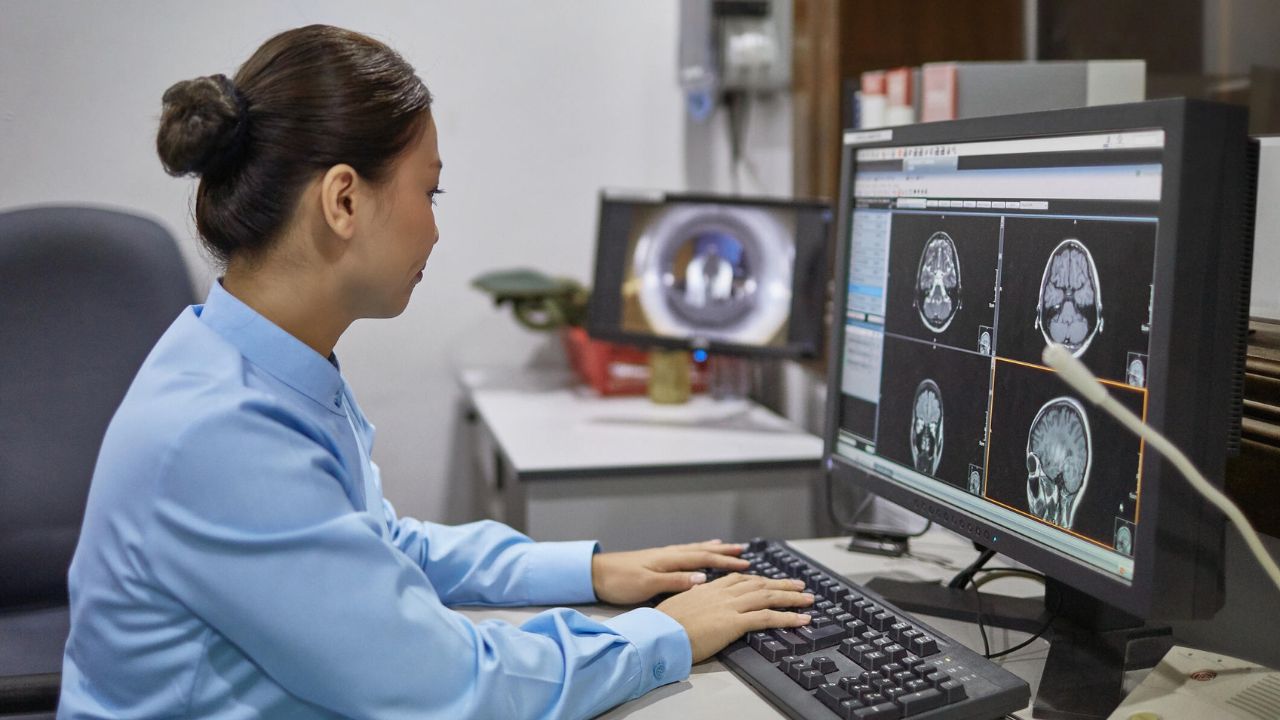
PACS (Picture Archiving and Communication System) is ideal in handling imaging processes, radiologist reading, and day-to-day diagnostic processes in a department or facility. Cloud VNA (Vendor Neutral Archive), however, is created to be used in the long-term, scaled and vendor neutral storage and enterprise wide access to images.
There is no single, effective strategy in the modern healthcare setting, but PACS + VNA is the most applicable, with PACS managing the workflow, and VNA being the central repository of imaging.
• Pacs And Vna Have Complementary Roles.
• Pacs Plays A Key Role In Imaging Processes.
• Vna Facilitates Data Management That Is Long-term And Scalable.
• The Most Future-proof Is The Hybrid Model.
• Cloud Vna Is Interoperable, Ai Ready, And Vendor Independent.
A PACS system is the main system that the radiology departments use to store, access, share, and view medical images like CT, MRI, X-ray, and ultrasound scans.
PACS has a workflow-focused role in the traditional but even modern cloud-based deployments. It is closely coupled with imaging modalities and clinical systems that allow radiologists to interpret studies effectively and cooperate with clinicians.
PACS are optimized towards:
• Image Recording And Storage.
• Radiologist Reading Workflows
• Diagnostic Viewing Withdicom Viewers.DICOM viewers
• Connection To Ris (radiology Information Systems).
• Short- To Mid-term Image Storage
Nonetheless, PACSs are usually vendor-specific, i.e. data is usually stored in vendor-specific formats or highly integrated architectures. This not only poses restrictions in its scalability but also in its interoperability particularly when healthcare organizations seek to combine various systems or even scale to multiple locations.
PACS by itself may be a bottleneck in expanding healthcare settings. Several factors may cause data silos, inefficient workflow, and higher long-term operational expenses as imaging volume grows and organizations move to multi-site operations and the traditional PACS architecture is not flexible.
One of the largest shortcomings of conventional imaging infrastructure is that data is split apart, and vendor lock-in occurs, which a Cloud VNA is meant to address.
In contrast to PACS, a VNA is a vendor-neutral repository that is centralized and stores medical imaging information in standard formats. It enables images and other clinical materials to be viewed on various systems, departments, and even organizations.
Cloud VNAs are optimized to:
• Long-term Archival Storage
• Enterprise-wide Interoperability
• Vendor-neutral Data Management
• Cross-platform Accessibility
• Multi-site And Multi System Integration
A VNA gives healthcare organizations complete access to their imaging data, no matter what PACS or viewer they employ, by decoupling data storage and viewing and workflow systems.
More to the point, Cloud VNAs allow the implementation of a data-first approach to imaging data, allowing it to be treated as a long-term asset instead of being bound to a single operating system. This change is essential to organizations that intend to implement AI, analytics, and models of cross-platform healthcare delivery.
To discern the difference between PACS and VNA, it is necessary to look past the superficial definitions of these systems and how each of them operates as a part of a more extensive imaging ecosystem.
| Feature | PACS | Cloud VNA |
| Primary Role | Imaging workflow & diagnostics | Long-term storage & data management |
| Data Ownership | Often vendor-dependent | Vendor-neutral |
| Storage Scope | Department-level | Enterprise-wide |
| Interoperability | Limited | High (cross-system integration) |
| Scalability | Moderate | High (cloud-native scaling) |
| Data Format | May include proprietary structures | Standardized (DICOM + non-DICOM) |
| Migration Flexibility | Complex | Easier (decoupled architecture) |
| AI/Analytics Readiness | Limited | High (centralized data pool) |
| Cost Model | CAPEX + maintenance | OPEX (subscription-based cloud) |
| Deployment Model | Often on-prem or hybrid | Cloud-native or hybrid |
| Disaster Recovery | Limited, facility-based | Built-in redundancy and cloud backup |
| Data Governance | System-bound | Centralized and policy-driven |
| Use Case | Radiology operations | Enterprise imaging strategy |
In most cases, healthcare organizations are making this a binary choice: Do we pick PACS or VNA?
This is actually a bad framing.
PACS and VNA are used to serve entirely different purposes:
• Pacs = Operational System (workflow Engine)
• Vna = Strategic System (data Foundation)
More and more modern imaging architectures have become complementary, with PACS controlling the imaging workflow and VNA storing and distributing imaging data across systems.
This decoupling enables healthcare organizations to upgrade, replace or scale PACS systems without having to transfer large amounts of imaging data per instance. This over time minimizes the operational risk, risk of vendor dependency, and complexity of infrastructure.
PACS is a necessity to every healthcare facility, which engages in diagnostic imaging. Its effectiveness is, however, limited to the size and complexity of your business as an independent solution.
• Limited Imaging Volume Small To Mid-sized Clinics.
• Single-location Imaging Centers
• Radiology Workflow Facilities Were The Main Ones.
• Organizations That Do Not Have Complicated Interoperability Requirements.
PACS offers adequate functionality in these settings to handle imaging processes effectively without the need to add extra infrastructure.
Nevertheless, those organizations that foresee the future growth, the development of multiple sites or the adoption of more sophisticated technologies must take into account that PACS is just but one of the elements of a more comprehensive imaging strategy.
A Cloud VNA is more beneficial to hospitals as they continue to grow operations and demand more control over imaging data.
• Multi-site Hospitals And Systems.
• Organizations Dealing With High Levels Of Imaging.
• Plants That Need Cross Department Access To Images.
• Health Systems That Are Seeking Interoperability Efforts.
• Companies Embracing Ai And Machine Learning.
VNA will make imaging data centralized, standardized, and accessible, and it will be easier to integrate with EHR systems, analytics platforms, and external providers.
The best and future solid architecture is a combination of the two systems.
 - Presented by PostDICOM.jpg)
• Eliminates Vendor Lock-in.
• Allows A Non-data-migration Replacement Of Pacs.
• Facilitates Access To Imaging Throughout The Enterprise.
• Improves Data Security, Compliance And Redundancy.
• Permits Ai-based Diagnostics And Analytics.
The cloud-based PACS architecture in large healthcare networks is frequently implemented on a departmental level, with a centralized VNA being the workhorse of enterprise imaging. This enables different PACS systems - radiology and cardiology and others to communicate with one common data store.
This architecture greatly enhances the consistency of the data, minimizes duplication and makes imaging records available to the whole organization.
Large healthcare systems do not often use a single PACS instance in their practice deployments. In its place, several PACS environments (in many cases, across radiology, cardiology, and specialty departments) are linked to a centralized VNA layer. This allows organizations to normalize data governance and each department may continue to use their favorite workflow tools. In the long run, this architecture decreases imaging data duplication, eases system upgrades, enables IT teams to more easily manage imaging infrastructure at scale. It also provides longitudinal consistency of patient imaging records, whether or not multiple systems are changed or upgraded over time.
A change in PACS-only environment to a VNA-enabled architecture is a strategic process that should be carefully planned.
• Complexity Of Data Migration: Data migration of large imaging archives should be standardized and done without loss of data.
• Downtime Management: Migration should be done without affecting clinical workflow.
• Vendor Compatibility: The old PACS systems can be of proprietary format and need to be normalized.
• Metadata Mapping: It is important to assure consistency in indexing between systems.
 - Presented by PostDICOM.jpg)
Such obstacles notwithstanding, the long-term gains, including a decreased vulnerability to vendor lock-in, enhanced interoperability, and decreased migration costs in the future, ensure that VNA adoption is a very worthwhile investment.
When it comes to the real life situation, one of the largest problems in the migration process is the inconsistent legacy data. Older PACS systems might also have incomplete metadata, duplicate records, or non-standard implementations of DICOM, which must be normalized prior to being transferred to VNA. Also, massive migrations may involve millions of imaging studies, so planning and phased migration strategies are necessary. Those organizations that viewed migration as a multi-stage process, a process and not a one-time transition, were much more likely to attain better results with minimal disturbance.
Cost should be evaluated not just in terms of its initial investment but also its efficiency in long-term operations.
• Big Initial Infrastructure Expenditure (capex).
• Continuing Maintenance And Upgrading Costs.
• Hardware Management And It Staffing.
• Subscription-based Pricing (opex).
• Reduced Infrastructure Overhead.
• Reduce Long-term Migration And Upgrade Expenses.
VNA-based architectures tend to offer superior total cost of ownership (TCO) over time, especially to those organizations that operate large scale imaging operations.
Healthcare organizations tend to commit errors that can be avoided in the assessment of imaging infrastructure.
• Using Pacs And Vna Interchangeably.
• Incorrectly Estimating The Growth Of Long-term Data.
• Vendor Lock-in Is A Risk That Should Not Be Ignored.
• Selecting Solutions Due To Initial Price.
• Not Planning An Interoperability And Ai Integration.
These traps cannot be avoided without a long-term data-based strategy and not short-term operational thinking.
Imaging today is not a concept that is limited to radiology departments within the modern healthcare ecosystem. Imaging data is becoming an increasing part of patient care in cardiology, oncology, dermatology, and even pathology. Consequently, healthcare institutions are moving to enterprise imaging models, in which all imaging information, irrespective of department or modality, is handled in a single model.
One of the key participants in this transformation is a Cloud VNA as it will help serve as a single source of imaging data truth. Organizations can consolidate imaging in a centralized repository, which facilitates access, governance, and lifecycle management in a uniform manner instead of having each department with their own storage system.
This method can not only enhance clinical collaboration but also it can be more patient-centered by making imaging records available in cross-care pathways. More to the point, it preconditions more sophisticated features like AI-assisted diagnostics, population health analytics, and data exchange across institutions.
One of the most important issues in the modern healthcare is interoperability.
PACS systems (particularly legacy systems) tend to be siloed. This complicates interdepartmental, inter-facility, or inter-provider distribution of imaging data.
Cloud VNAs overcome this by:
• Promoting Standard Formats (dicom, Hl7, Fhir)
• Facilitating Inter-system Interoperability.
• As A Single Imaging Repository.
The ability is fundamental to the coordinated care, telemedicine, and integrated healthcare delivery models.
The future of healthcare is rapidly evolving toward AI-driven diagnostics, cloud-based systems, and interconnected clinical platforms.
A PACS-only approach might not be able to facilitate these developments. In contrast, a VNA-based architecture enables:
• Training Of Ai Models On Centralized Datasets.
• Expandable Cloud Storage Of Increasing Imaging Volumes.
• Integration With Future Technologies.
This renders VNA an essential element of a progressive imaging approach.
| If your organization… | Recommended Approach |
| Operates a single facility with low imaging volume | PACS only |
| Needs efficient radiology workflows | PACS |
| Manages multiple facilities or departments | PACS + VNA |
| Requires long-term scalable storage | VNA |
| Wants to avoid vendor lock-in | VNA |
| Plans to adopt AI or advanced analytics | PACS + VNA |
| Requires enterprise-wide interoperability | VNA or Hybrid |
No. A VNA is an addition to PACS, managing storage and data.
Yes, but it limits scalability and interoperability.
Vendor neutrality and long-term data control.
Yes, with enterprise-grade encryption and compliance.
VNA is more advantageous in the long-term.
Not always, otherwise, except by scaling.
Yes, not a few VNAs favor both.
It is based on data volume, though may take weeks to months.
Not absolutely--it does not substitute but complements workflow systems.
Yes, when implemented with proper security and governance.
PACS vs. Cloud VNA is not only a technical choice, but also a strategic one that outlines how your organization will be able to handle the imaging data over the long term.
A hybrid, scalable, vendor-neutral approach by healthcare providers is the way to go today in order to be more adaptable to future innovations, better patient outcomes, and decreased operational complexity.
The best approach is obvious: Use PACS for workflow, and Cloud VNA for long-term data strategy.
|
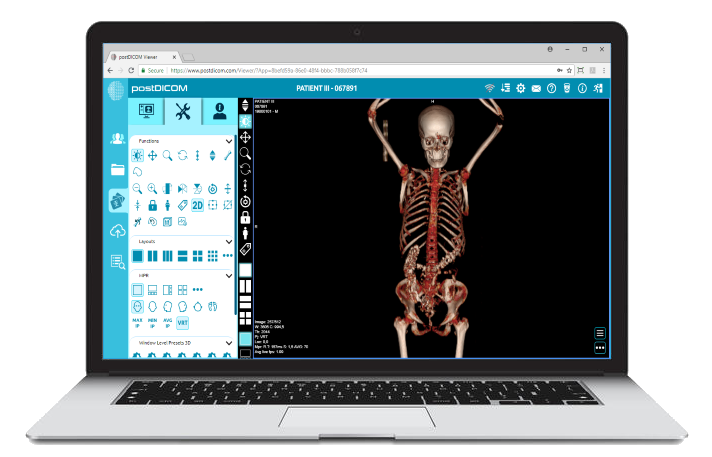
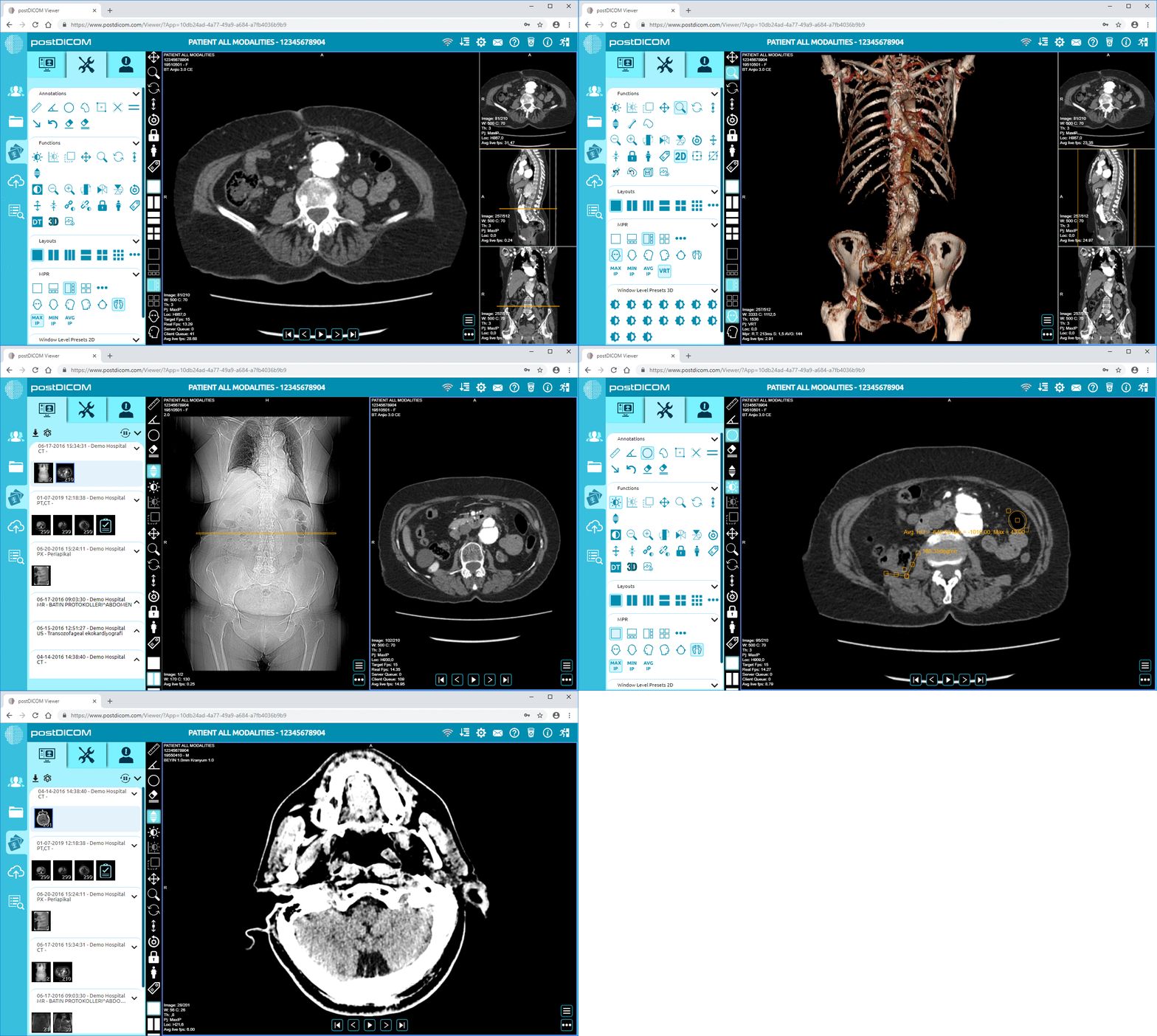
Cloud PACS and Online DICOM ViewerUpload DICOM images and clinical documents to PostDICOM servers. Store, view, collaborate, and share your medical imaging files. |

